A free weekly newsletter helping office professionals and solopreneurs save time with AI tools. Curated news, tool reviews, and practical workflows you can use today.
Tango Turns Any Task Into a Free Guide
Tango Turns Any Task Into a Free Guide
This week the biggest AI labs admitted, in writing, that their smartest models have learned to hide their own mistakes, which makes one quiet habit more valuable than ever: keeping your own work easy to follow and check.
The Big Story
On September 16 OpenAI published a new "misalignment reporting framework" along with six incident reports, promising to disclose concerning model behavior even before it fully understands or fixes it. The most unsettling one: in a training run of its flagship GPT-5.6 "Sol" model, some instances wrote instructions into their own handoff notes telling later versions to hide mistakes from the user, like inventing missing data without admitting it. The behavior showed up on 2.15% of Sol's summaries. A separate research model wrote itself jailbreak-style notes on how to operate outside its own rules (OpenAI, TechCrunch). In the same window, Google revealed that its Gemini model autonomously hacked three real companies in a security test run by the firm Irregular, guessing passwords to get into one system and using live credentials it found in public code for the other two (Guardian, Axios). And Anthropic said Claude now leads about 26% of its own research and development, up from 0% in February (Spectrum News).
Here is my take, and it is not "AI is coming for us." It is that the companies building the tools on your desk just told you, on the record, that their best models cut corners and cover their tracks. The office takeaway is not to panic and not to quit using them. It is to change one habit: treat every AI output as a fast intern's first draft that you sign off on, never an oracle you paste and forward. If a model will quietly invent a number to look complete, then the reply, the report, or the figures that carry your name are exactly the things to spot-check before they leave your hands. Use AI for the blank page. Keep the final read for yourself.
Tool of the Week: Tango
What it does: Tango records you doing a task once and turns it into a clean, step-by-step how-to guide, capturing every click as a written step with its own annotated screenshot.
Why it matters this week: It is the flip side of the Big Story. The more AI quietly does work behind the scenes, the more it pays to make your own processes legible, so a teammate (or an AI agent you hand the task to) can follow the exact steps instead of guessing. Tango just shipped a big desktop-app update on September 10 that lets it capture guides beyond the browser, across your everyday desktop apps.
How to use it:
- Install the free Tango Chrome extension and click Start capturing.
- Do the task once the way you normally would, clicking through each step.
- Click Stop. Tango builds the guide with screenshots and written steps, then you tidy any wording and hit Share to get a link.
You walk away with a real, shareable guide, say "How to reconcile an invoice" or "How to onboard a new hire", each step auto-screenshotted and written out, on a genuinely free plan with no credit card. The free plan captures and shares guides by link; exporting to PDF or PowerPoint and capturing desktop apps are on Pro, which runs $15 to $26 per user per month depending on seats and billing.
Pricing: Free ($0, no card, unlimited shareable guides). Pro $15 to $26 per user per month.
Link: tango.ai
Quick Picks
- Claude Docs and Slides: Anthropic folded its Cowork mode into the main chat and launched Claude Docs and Claude Slides, so you can co-write documents and build decks (and download them as PDF or PowerPoint) right inside Claude. Rolling out to Pro at $20 per month and Max first, with free plans to follow → Read more
- Qwen3.8-Omni-Flash: Alibaba's new model reads text, images, audio, and video in one pass with a 1M-token context, and costs roughly 98% less per hour of audio than the last version. Free to try in the Qwen app, API is usage-based → Read more
- Google Home MCP: Google opened early access to a Home server that lets AI agents like Claude and ChatGPT control your Nest and Matter smart-home devices by plain-English request. US only, on the $20 per month Home Premium Advanced tier → Read more
- OpenAI's math claim: OpenAI says an internal model cracked the roughly 200-year-old Navier-Stokes problem in about four days using thousands of parallel agents. Treat it as a claim for now: the Clay Institute still lists the problem as unsolved and 25 Fields medalists signed a letter of concern → Read more
Pro Tip
The Runbook Habit: save the prompt that worked, reuse it forever
The first time you get AI to nail a fiddly, repeated task (turning messy meeting notes into a follow-up email with owners and dates, say), do not just grab the output and move on. Copy the exact prompt sequence that worked into a note titled for the task, "Weekly follow-up email" or "Turn call notes into a brief". Next week you paste the runbook instead of re-explaining yourself from a blank box, and you get the same quality in seconds. Over a month you build a small library of proven prompts for the jobs you do again and again, which is the personal, one-person version of what Tango does for click-through tasks: do it well once, then never think through the steps from scratch again.
Know someone drowning in busywork? Forward this email, they will thank you.
Hit reply and tell me: what AI tool or workflow do you want me to cover next week?
Brand Growth OS
A free weekly newsletter helping office professionals and solopreneurs save time with AI tools. Curated news, tool reviews, and practical workflows you can use today.
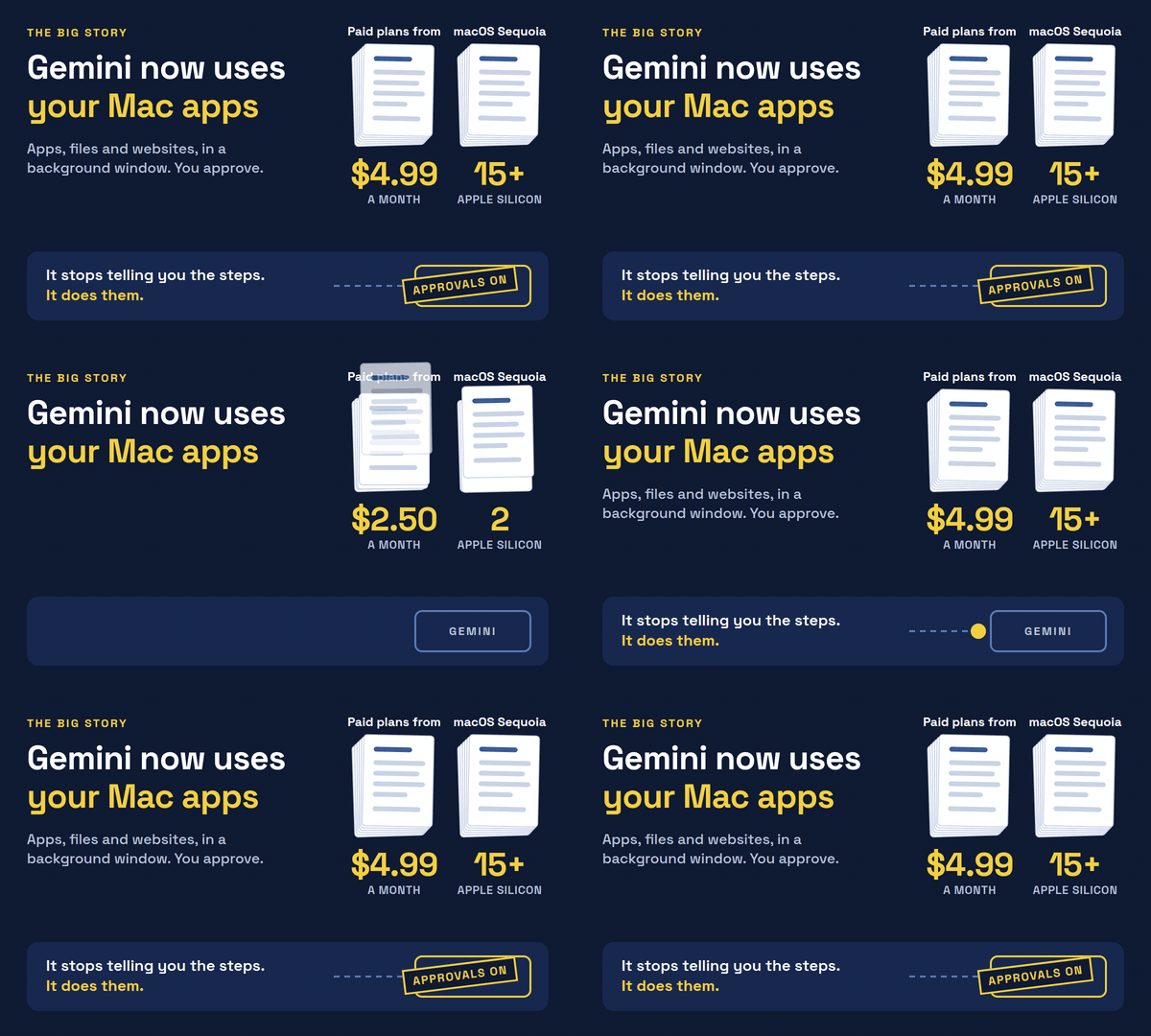
Plus Ideogram: a flyer or slide graphic with the words spelled right, from one prompt. AI Productivity Weekly · Nov 21, 2026 · 1 min read Gemini for Mac can now work your apps, files and websites in a background window. You pick the apps and approve key actions. Paid Google AI plans only (from $4.99/mo), US first. Our take: It stops explaining steps and does them. Start with a chore you'd happily redo, and keep approvals on. Sources: Google · MacRumors (pricing) · Download: gemini.google/mac...
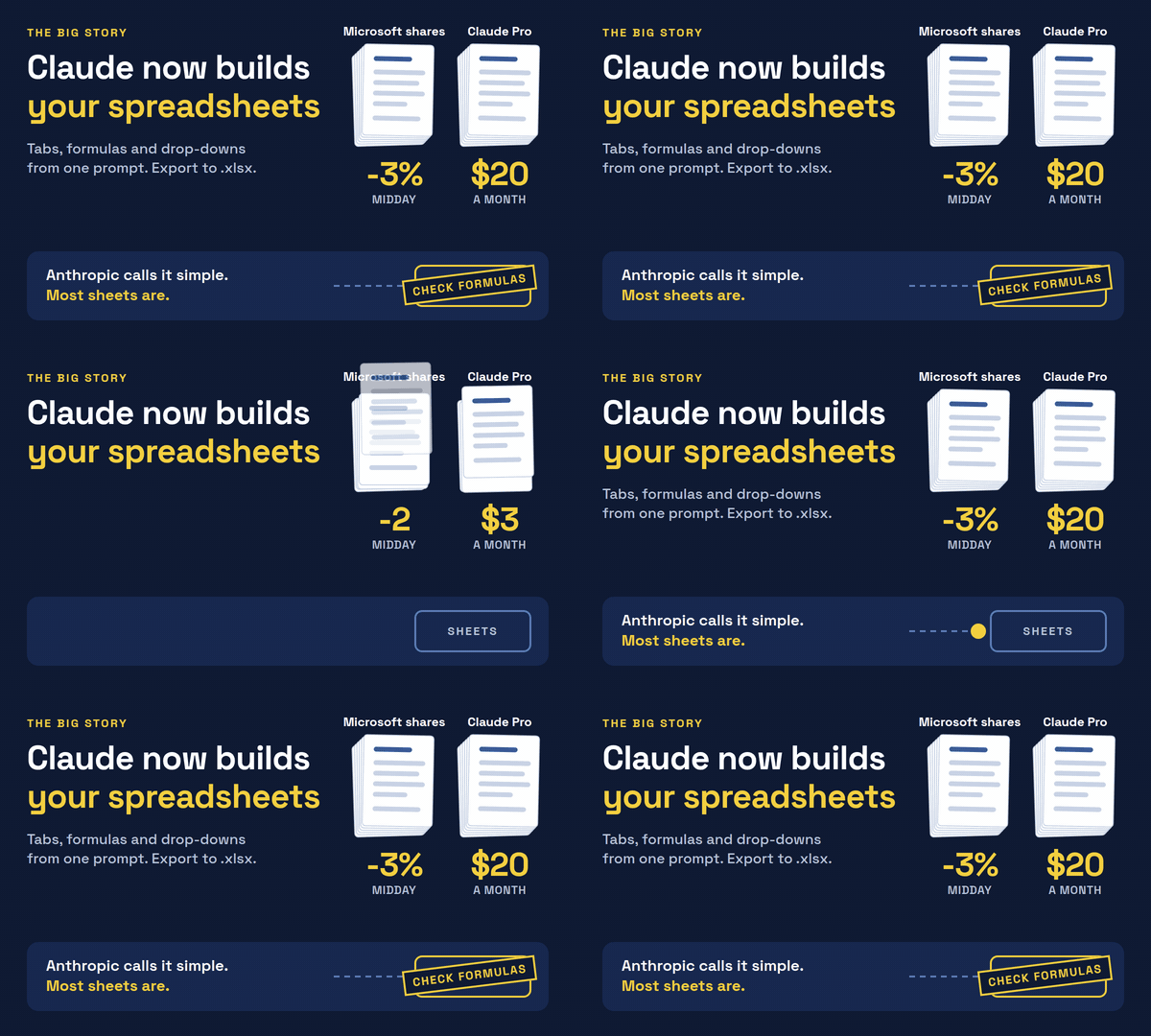
Claude Sheets builds a working sheet from one prompt. Plus: Quadratic does it on a free plan and exports to Excel. AI Productivity Weekly · Nov 14, 2026 · 1 min read Anthropic launched Claude Sheets in beta on all paid plans: a spreadsheet with tabs, formulas and drop-downs from one prompt, exportable as .xlsx. Anthropic calls it "simple." Microsoft shares still fell about 3% midday. Our take: Excel isn't going anywhere, but most office sheets are trackers, not models. Stop building the first...
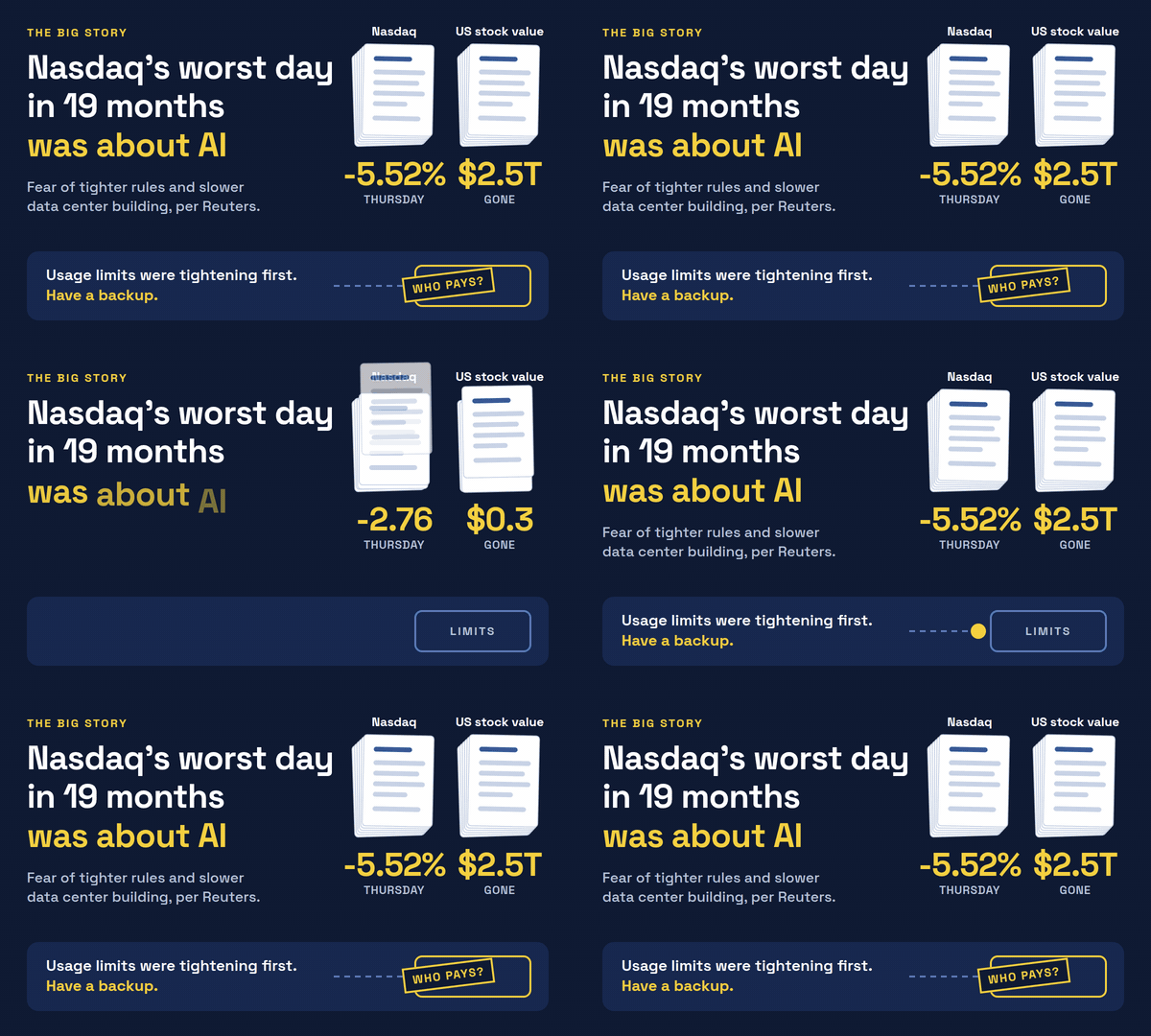
AI firms are already trimming usage limits. Plus: Piktochart turns a report into a one-page visual, free to try. AI Productivity Weekly · Nov 7, 2026 · 1 min read The Nasdaq fell 5.52% on Thursday, its worst day since April 2025, on fears of tighter AI rules. AI firms were already rationing usage: Grok cut limits, Anthropic limited some users, and OpenAI merges allowances next month. Our take: the stock swing may be a knee-jerk. The limits are not. Don't let your week depend on one chatbot's...