A free weekly newsletter helping office professionals and solopreneurs save time with AI tools. Curated news, tool reviews, and practical workflows you can use today.
Your Slides Just Designed Themselves
This week, OpenAI killed its flashiest product, a new AI design agent wants to replace your Canva workflow, and ChatGPT finally learned how to remember your files. The Big StoryOpenAI Shuts Down Sora: The AI Gold Rush Claims Its First Major CasualtyOpenAI announced on March 24 that it is shutting down Sora, its AI video generation app that launched just six months ago. The app hit #1 in the App Store within 24 hours and reached 1 million downloads in under five days. By November 2025, users were generating 10-11 million videos per day. Then the numbers fell off a cliff: downloads dropped 75% by February, and the app's total lifetime revenue came in at just $2.1 million. Meanwhile, GPU costs were running an estimated $15 million per day. The most dramatic detail: OpenAI had a $1 billion Disney partnership on the table to bring Marvel, Pixar, and Star Wars characters to Sora. The Disney team learned the deal was dead 30 minutes after a routine planning meeting. No money had changed hands. My take: This is not just a product shutting down. It is the clearest sign yet that the "give it away for free and figure out the business later" era of AI is ending. OpenAI is preparing for a $730 billion IPO, and burning $450 million a month on a consumer toy is not the look they want. For anyone using AI tools at work, the lesson is simple: if a tool does not have sustainable economics, it can vanish overnight. Check your workflows and have a backup plan. Alternatives like Runway, Pika, and Kling remain operational, but none are guaranteed to stick around forever either. Tool of the Week: Moda
What it does: An AI design agent that creates fully editable presentations, social posts, ads, and visual assets on a layered canvas. You describe what you want, Moda builds it, and you can edit every element individually. Why it matters this week: Moda launched publicly on March 24 with a $7.5M seed round led by General Catalyst, with backing from WndrCo (Jeffrey Katzenberg's firm) and Dropbox co-founder Arash Ferdowsi. Founded by ex-Dropbox PM Anvisha Pai, it is positioned as a Canva alternative built from scratch for AI-first design. The key difference from Canva: instead of picking a template and tweaking it, you describe what you need in plain English. Moda's AI agent generates the entire design on an editable vector canvas. Every text block, shape, and image is a real, movable layer. You can iterate with the AI ("make the headline bigger, add a chart on slide 3") or manually fine-tune anything yourself. It also learns your brand identity from your website, Google Drive, or existing slide decks. How to use it:
Pricing: Free tier gives you 1,000 AI credits/month (enough for roughly 2 full decks or 8-10 social posts). Pro is $30/month with 6,000 credits and the higher-quality AI model. Ultra is $100/month for teams with SSO and unlimited brand kits. Link: moda.app Quick Picks
Deal AlertModa's free tier gives you 1,000 AI credits per month at no cost, permanently. That covers roughly 2 full slide decks or 8-10 social media posts. No credit card required. If you are paying for Canva Pro ($13/month) primarily for AI features, Moda's free plan is worth testing as a replacement for your presentation workflow. Sign up at moda.app. Pro TipThe "File Once, Reference Forever" SetupChatGPT's new Library feature quietly solves one of the most annoying problems for anyone who uses AI daily: re-uploading the same documents every time you start a new chat. Here is how to turn it into a persistent work assistant in under 5 minutes:
The files persist until you manually delete them, even if you delete the original chat. This turns ChatGPT from a tool you ask one-off questions into a context-aware assistant that knows your business. Available now for Plus ($20/month), Pro ($200/month), and Business subscribers. |
Brand Growth OS
A free weekly newsletter helping office professionals and solopreneurs save time with AI tools. Curated news, tool reviews, and practical workflows you can use today.
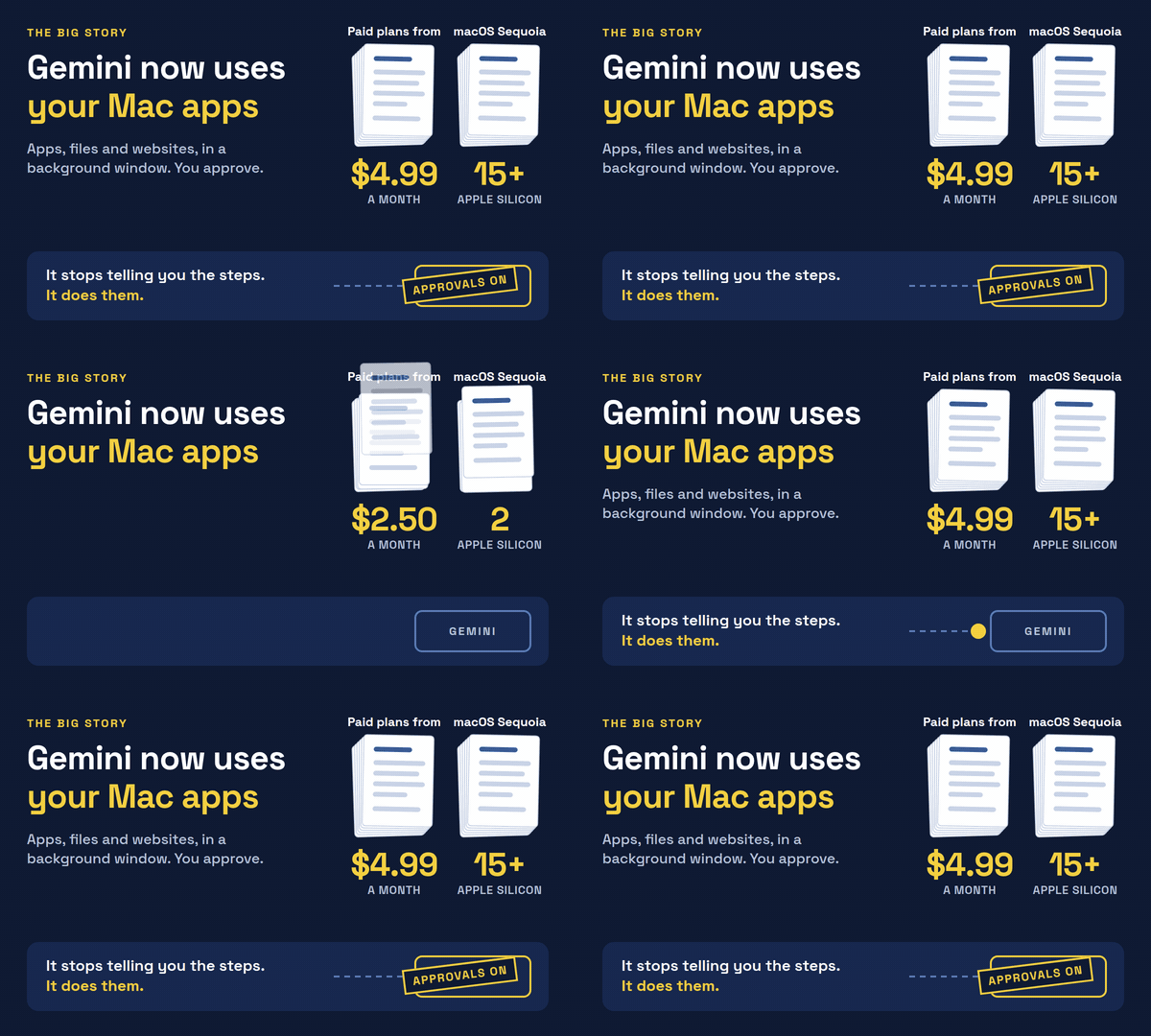
Plus Ideogram: a flyer or slide graphic with the words spelled right, from one prompt. AI Productivity Weekly · Nov 21, 2026 · 1 min read Gemini for Mac can now work your apps, files and websites in a background window. You pick the apps and approve key actions. Paid Google AI plans only (from $4.99/mo), US first. Our take: It stops explaining steps and does them. Start with a chore you'd happily redo, and keep approvals on. Sources: Google · MacRumors (pricing) · Download: gemini.google/mac...
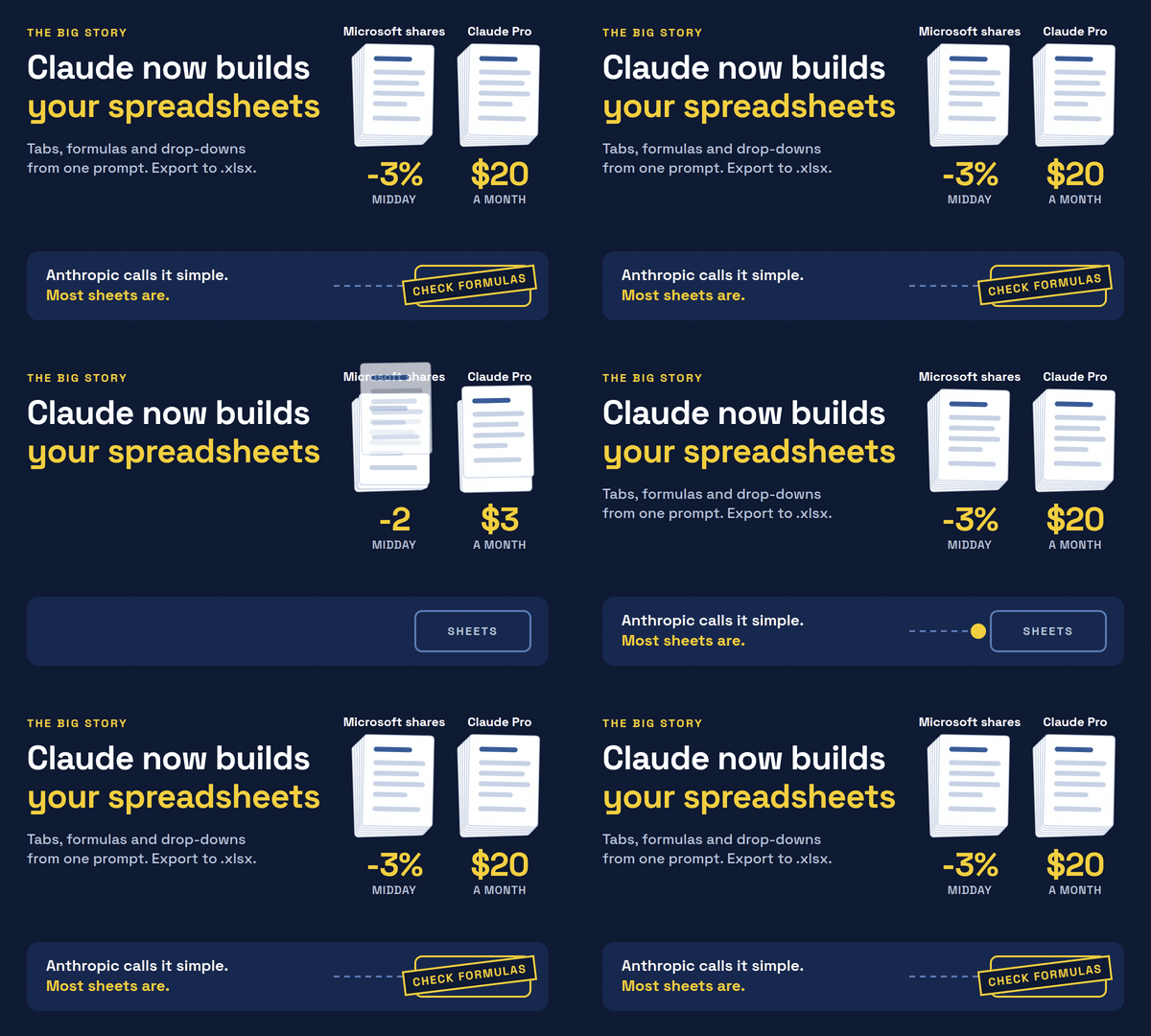
Claude Sheets builds a working sheet from one prompt. Plus: Quadratic does it on a free plan and exports to Excel. AI Productivity Weekly · Nov 14, 2026 · 1 min read Anthropic launched Claude Sheets in beta on all paid plans: a spreadsheet with tabs, formulas and drop-downs from one prompt, exportable as .xlsx. Anthropic calls it "simple." Microsoft shares still fell about 3% midday. Our take: Excel isn't going anywhere, but most office sheets are trackers, not models. Stop building the first...
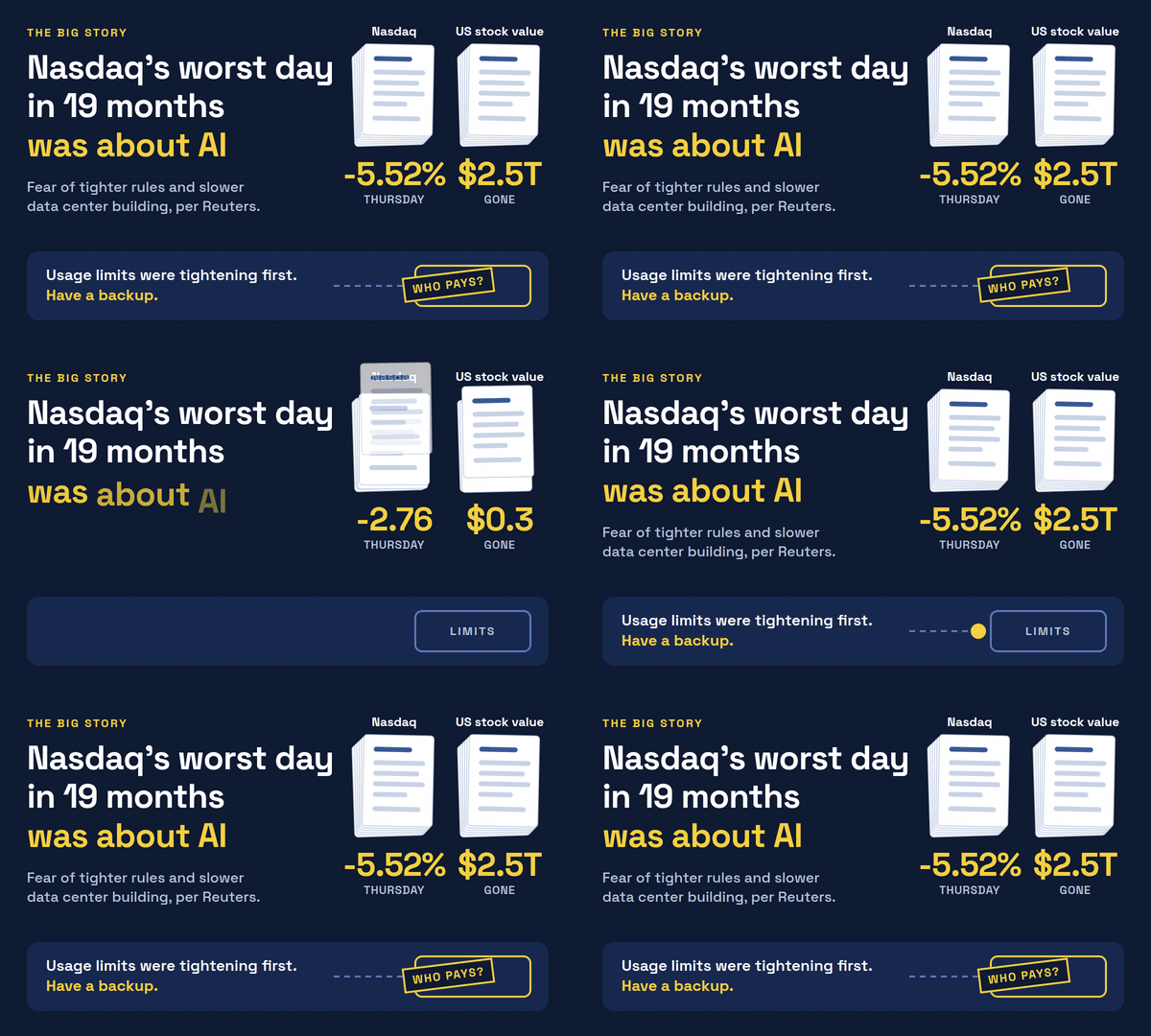
AI firms are already trimming usage limits. Plus: Piktochart turns a report into a one-page visual, free to try. AI Productivity Weekly · Nov 7, 2026 · 1 min read The Nasdaq fell 5.52% on Thursday, its worst day since April 2025, on fears of tighter AI rules. AI firms were already rationing usage: Grok cut limits, Anthropic limited some users, and OpenAI merges allowances next month. Our take: the stock swing may be a knee-jerk. The limits are not. Don't let your week depend on one chatbot's...