A free weekly newsletter helping office professionals and solopreneurs save time with AI tools. Curated news, tool reviews, and practical workflows you can use today.
Meet Your AI Workforce
Meet Your AI WorkforceThis week, Anthropic built an AI so powerful they refused to release it. Instead, they handed it to Apple, Microsoft, and Google to hunt for security flaws. Meanwhile, an open-source project is letting people run entire companies staffed by nothing but AI agents. The future of work just got very real. The Big StoryAnthropic locked down its most powerful AI model, then put it to work hunting zero-day vulnerabilities Anthropic quietly unveiled Claude Mythos, a new frontier model so capable at finding software vulnerabilities that the company decided not to release it publicly. In internal testing, Mythos discovered thousands of previously unknown zero-day flaws across every major operating system and web browser, including a 27-year-old bug in OpenBSD that had gone undetected for nearly three decades. The striking part: Anthropic did not train Mythos to do this. These cybersecurity capabilities emerged on their own as a side effect of improvements in coding and reasoning. That should make you pause. When an AI gets good enough at understanding code, it starts seeing weaknesses that humans have missed for decades. Rather than shelving the model, Anthropic launched Project Glasswing, a $100 million initiative giving roughly 40 organizations limited access to Mythos for defensive security research. The partner list reads like a who's who of tech: AWS, Apple, Cisco, CrowdStrike, Google, JPMorganChase, Microsoft, and NVIDIA. My take: This is the most responsible AI deployment I have seen from any frontier lab. Instead of racing to ship the model and deal with consequences later, Anthropic chose to restrict access and channel its capabilities toward defense. If you use any major browser or operating system (you do), the software you rely on every day is about to get meaningfully more secure because of this decision. The tradeoff is that the rest of us do not get to play with Mythos. For now, that seems like the right call. Tool of the Week: Paperclip
What it does: Paperclip is an open-source platform that lets you organize AI agents into a company structure, complete with org charts, roles, budgets, and task delegation, so they can run business operations autonomously. Why it matters this week: Paperclip launched on March 2, 2026 and has already crossed 51,000 GitHub stars, making it one of the fastest-growing open-source AI projects of the year. On April 3, a developer named @dotta stood up an entire content company called Effloow staffed by 14 AI agents using Paperclip, with a CEO agent delegating work to manager agents who assign tasks to worker agents. How to use it:
The real power is in the governance layer. Every agent gets a monthly budget with hard limits, every decision is traced and logged, and you can set approval gates for high-stakes actions. It is not a chatbot on autopilot. It is a managed workforce with accountability built in. Pricing: Free and open-source (MIT license). Self-hosted. Your only cost is the API usage of whatever AI models you connect. Quick Picks
Deal AlertPaperclip is entirely free. The platform is MIT-licensed, open-source, and self-hosted. You pay nothing for Paperclip itself. The only cost is API usage for the AI models you plug in (and many, like OpenClaw, have free tiers). If you have been curious about multi-agent workflows but deterred by enterprise pricing, this is the most accessible entry point available. Pro TipThe AI Delegation Audit: Find Your First Task to Hand Off Most people try AI for creative tasks first (writing, brainstorming) but the biggest time savings come from delegating repetitive operational work. Here is a 5-minute exercise:
The goal is not to automate everything at once. It is to prove the concept with one task and build momentum from there. Know someone drowning in busywork? Forward this email. They'll thank you. Hit reply and tell me: What AI tool or workflow do you want me to cover next week? |
Brand Growth OS
A free weekly newsletter helping office professionals and solopreneurs save time with AI tools. Curated news, tool reviews, and practical workflows you can use today.
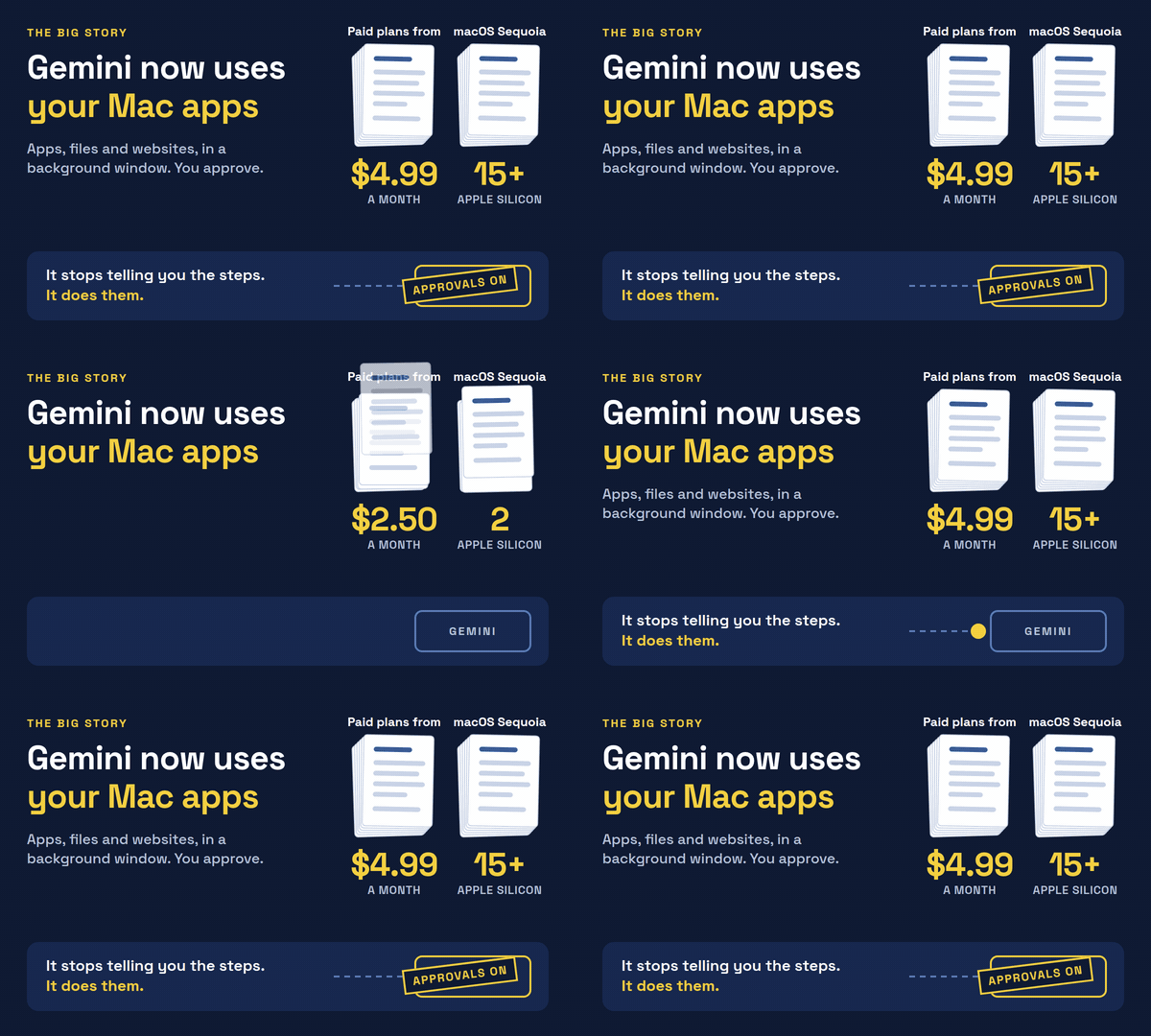
Plus Ideogram: a flyer or slide graphic with the words spelled right, from one prompt. AI Productivity Weekly · Nov 21, 2026 · 1 min read Gemini for Mac can now work your apps, files and websites in a background window. You pick the apps and approve key actions. Paid Google AI plans only (from $4.99/mo), US first. Our take: It stops explaining steps and does them. Start with a chore you'd happily redo, and keep approvals on. Sources: Google · MacRumors (pricing) · Download: gemini.google/mac...
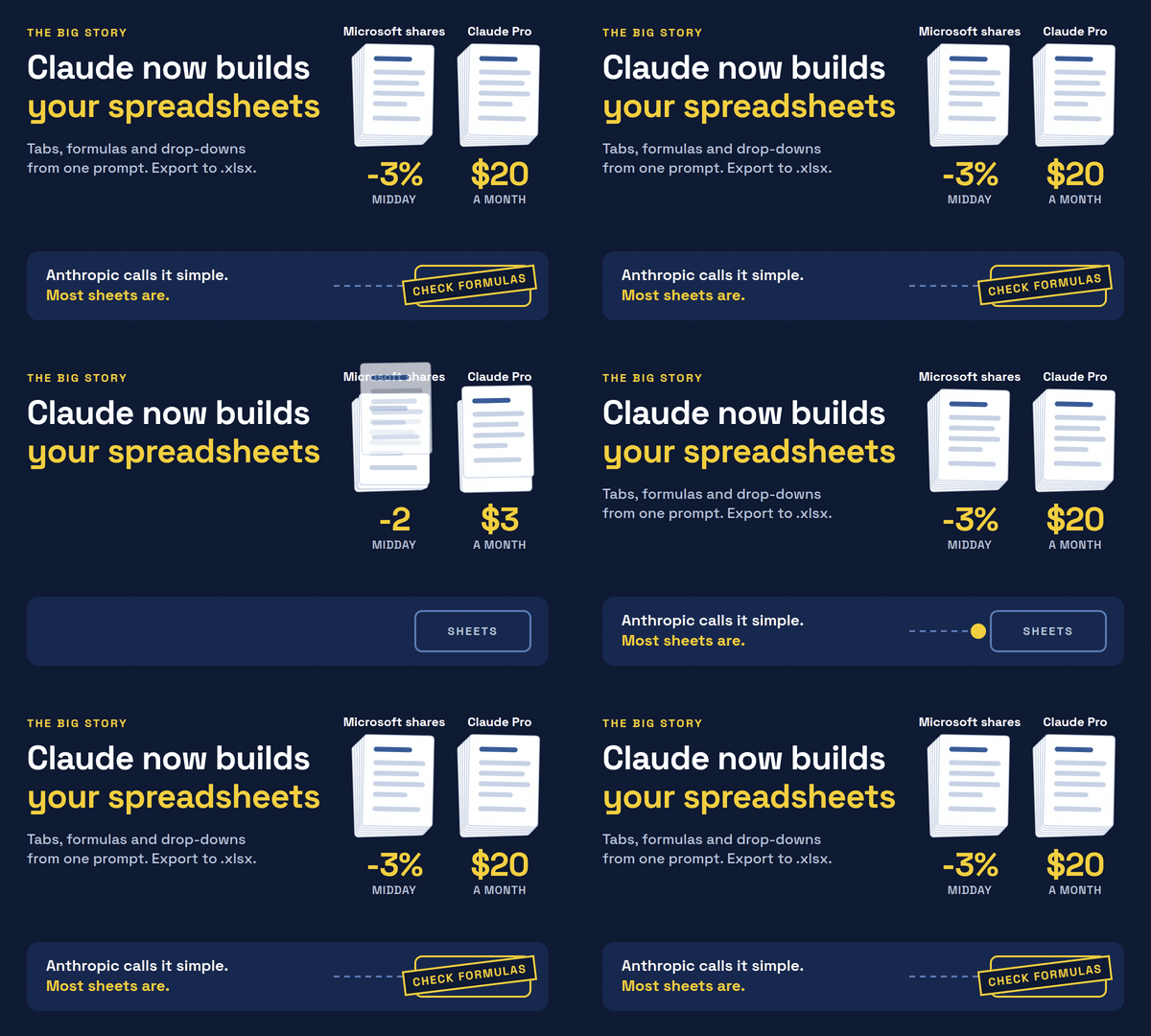
Claude Sheets builds a working sheet from one prompt. Plus: Quadratic does it on a free plan and exports to Excel. AI Productivity Weekly · Nov 14, 2026 · 1 min read Anthropic launched Claude Sheets in beta on all paid plans: a spreadsheet with tabs, formulas and drop-downs from one prompt, exportable as .xlsx. Anthropic calls it "simple." Microsoft shares still fell about 3% midday. Our take: Excel isn't going anywhere, but most office sheets are trackers, not models. Stop building the first...
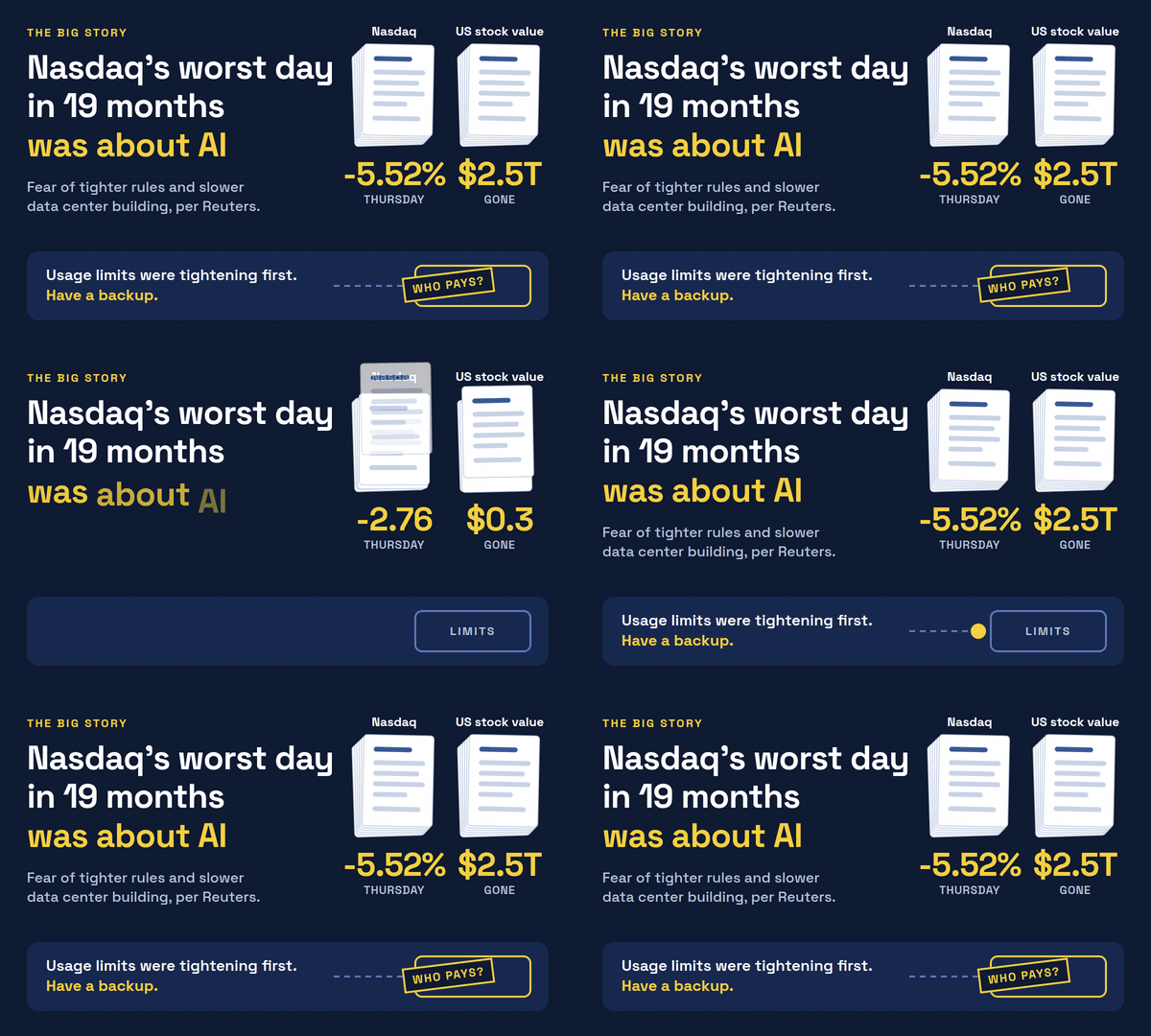
AI firms are already trimming usage limits. Plus: Piktochart turns a report into a one-page visual, free to try. AI Productivity Weekly · Nov 7, 2026 · 1 min read The Nasdaq fell 5.52% on Thursday, its worst day since April 2025, on fears of tighter AI rules. AI firms were already rationing usage: Grok cut limits, Anthropic limited some users, and OpenAI merges allowances next month. Our take: the stock swing may be a knee-jerk. The limits are not. Don't let your week depend on one chatbot's...